








Every summer ends. Releases ship, versions get deprecated, teams move on. What stays is the work done carefully enough to be remembered: systems that are calm under load, code that reads like a good story, and tools people stop noticing because they simply work.
That's the kind of thing I like to build.
🎐 AFTER THE SUMMER 🎐
The cicadas grow quiet, the long light turns gold,
the tide takes our footprints, the evening turns cold.
But the things that we made with our hands and our hearts
keep the summer alive when the next one starts.

I'm a backend engineer at ACCELQ, working on the services behind a test automation platform in Java, Spring and PostgreSQL. The same care for calm, long-lived systems runs through OpenShelves, a project I'm building to give university libraries a modern front door: as easy to search as the web, as dependable as the archive behind it.

- 📖 Readable first. Code is read far more often than it is written, so it should read well.
- 🪶 Small footprint. The simplest design that holds is usually the one that lasts.
- 🌊 Calm systems. Clear boundaries, honest errors, nothing surprising at 3 a.m.
- 🔍 Know the machinery. I'd rather understand how something works than wrap it in another library; that's how Kode began.
- 🔐 Secure by default. Hash the tokens, lock the doors, assume the database will one day leak.
- 📝 Write it down. A design doc and a clear README save more time than any clever trick.
- 🎯 Finish what matters. Do the agreed thing, do it properly, then stop. Scope creep is just unfinished work in disguise.


Kode: a programming language interpreter built on the JVM. The project where I first learned how languages work from the inside.

Anime, especially the quiet, bittersweet kind: stories like Summer Pockets about one fleeting summer, memories worth keeping, and the people who make them. They're a big part of why I care about the craft of telling a story well, in fiction and in software.
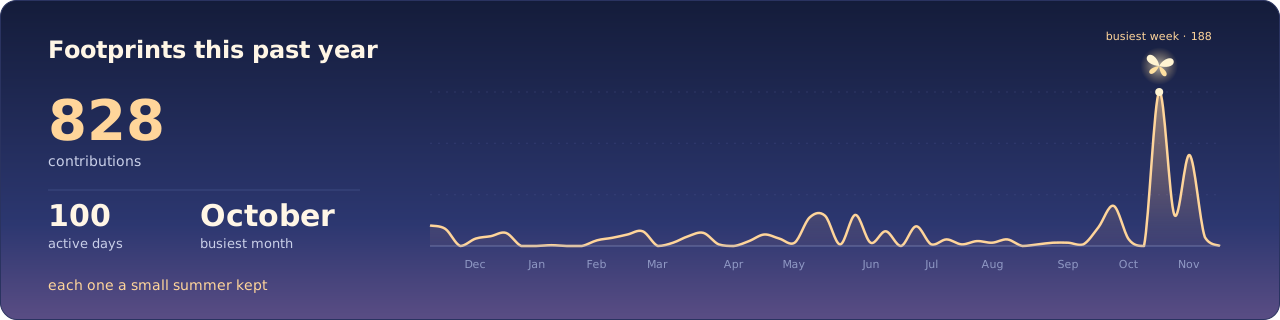
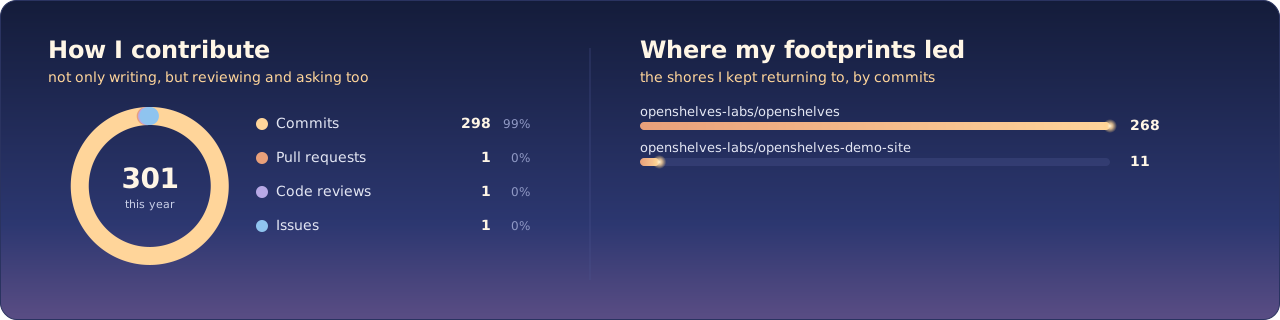
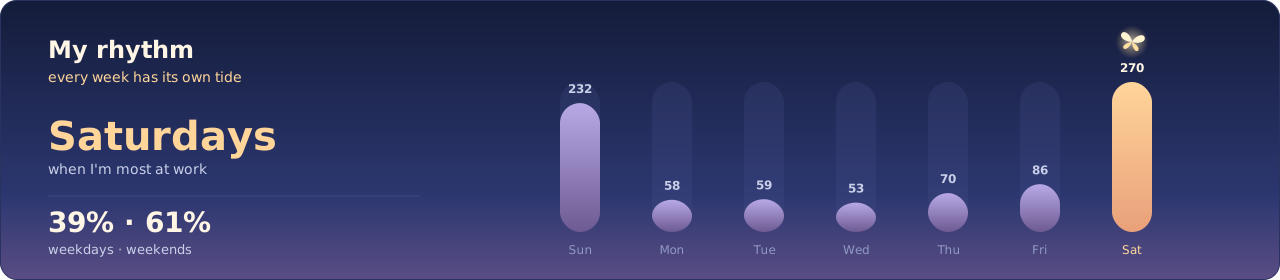
The tide takes most footprints. These ones it keeps.


Written on a long summer evening, meant to be remembered.